Functional Medicine
Pain & functional limitations
Regulatory and preventive medicine
Dr. med. univ. Klaus Wachter

How does a therapy session work?
After a thorough medical history review and examination of documents, a clinical examination is conducted with targeted orthopedic, neurological, and functional tests.
Subsequently, an individualized treatment plan is developed.
tDCS (Transcranial Direct Current Stimulation)
is safe and virtually painless. The treatments typically last 30 minutes and may extend over several sessions. The application and mechanism of the user-friendly headset are explained in detail during the first appointment, followed by a few supervised therapy sessions to assess effectiveness. Home applications are possible with the purchase of the device.
Side effects
tDCS is generally well tolerated, but like any medical intervention,
side effects can occur. The most common side effects include:
-
Skin redness, tingling, or itching under the electrodes,
-
mild headaches, fatigue.
-
These effects are usually temporary and subside after the stimulation ends.
tDCS supports existing therapies with its proven effectiveness (Level-A and B evidence).
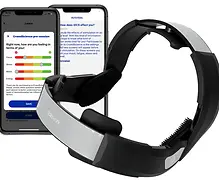


Quelle: www.platoscience.com
taVNS (transcutaneous auricular vagus nerve stimulation)
taVNS is a gentle form of stimulation where the Vagus nerve is electrically stimulated on the outer part of the ear. This area contains nerve branches that have a direct positive influence on the brainstem.
One of these areas is the so-called nucleus of the solitary tract (NTS), a core structure in the brainstem that plays a key role in the autonomic nervous system. It acts as a primary relay station for afferent information – these are incoming signals from the body – especially those coming from visceral organs, i.e., the internal organs like the heart and lungs.
Thus, the NTS is an essential part of the brain for maintaining homeostasis – the internal stability of the body – and for linking autonomic functions with higher cognitive processes.
This form of treatment is gentle, drug-free, non-invasive, and opens up new approaches for patients seeking alternative treatment options.
The disposable device is usually worn continuously for 2-3 weeks, and switching to the other side is necessary.

Side effects
They are similarly mild as tDCS, but local symptoms and fatigue may occur.
Afterwards, a clinical evaluation of the course of therapy and its possible improvements, as well as further coordination of the procedure, takes place .

Quelle: www.biolitec.com


Quelle: Nurosym.com
Studies
Transcutaneous auricular vagus nerve stimulation (taVNS) has been investigated in numerous studies worldwide.
Particular attention has been directed to the role of the autonomic nervous system, as stimulation at the ear activates neural pathways involved in the regulation of heart rate, circulation, and stress responses.
Findings also suggest modulation of inflammatory processes as well as improved regulation of autonomic functions.
Research has examined associations with depressive symptoms and anxiety, sleep quality and chronic fatigue, pain syndromes such as migraine, and conditions in which the immune system is involved.
In addition, potential effects on memory, attention, and cognitive functions have been explored, along with possible applications in the context of neurodegenerative diseases.
The body of research on transcutaneous auricular vagus nerve stimulation (taVNS) is diverse, varies in quality and strength of evidence, and continues to grow steadily.
The evidence is heterogeneous: randomized controlled trials (RCTs) with clinical relevance already exist, for example in migraine, depression, and Alzheimer’s disease, alongside numerous pilot, proof-of-concept, and physiological studies.
Overall, the evidence ranges between Level II and IV; however, a broadly established standard of care does not yet exist, as the field is still relatively new and continues to develop dynamically. Below you will find a selection of representative scientific studies.
Depression & Anxiety
Hein E et al. (2013). Transcutaneous vagus nerve stimulation: a new noninvasive method for management of depression? J Affect Disord. 150(2):885-891.
https://pubmed.ncbi.nlm.nih.gov/23201365/
Trevizol AP et al. (2016). Transcutaneous Vagus Nerve Stimulation (taVNS) for Major Depressive Disorder: An Open Label Proof-of-Concept Trial. Brain Stimul. 9(3):453-454.
https://pubmed.ncbi.nlm.nih.gov/27091204/
Sleep & Fatigue
Kraus T et al. (2007). CNS BOLD fMRI effects of sham-controlled transcutaneous vagus nerve stimulation in healthy volunteers. Brain Stimul. 1(1):37-45.
https://pubmed.ncbi.nlm.nih.gov/18316295/
Clancy JA et al. (2014). Non-invasive vagus nerve stimulation in healthy humans reduces sympathetic nerve activity. Brain Stimul. 7(6):871-877.
https://pubmed.ncbi.nlm.nih.gov/24275009/
Pain & Inflammation
Straube A et al. (2015). Treatment of chronic migraine with transcutaneous stimulation of the auricular branch of the vagal nerve (auricular t-VNS): a randomized, monocentric clinical trial. J Headache Pain. 16:543.
https://pubmed.ncbi.nlm.nih.gov/26282423/
Addorisio ME et al. (2019). Non-invasive Vagus Nerve Stimulation Inhibits Cytokine Production and Attenuates Disease Severity in Rheumatoid Arthritis. Front Immunol. 10:219.
https://pubmed.ncbi.nlm.nih.gov/31608028/
Autonomic Dysfunction & Epilepsy
Badran BW et al. (2018). Short trains of transcutaneous auricular vagus nerve stimulation (taVNS) have parameter-specific effects on heart rate. Brain Stimul. 11(4):699-708.
https://pubmed.ncbi.nlm.nih.gov/29174326/
Stefan H et al. (2012). Transcutaneous vagus nerve stimulation (t-VNS) in pharmacoresistant epilepsy: a proof of concept trial. Epilepsia. 53(7):e115-e118.
https://pubmed.ncbi.nlm.nih.gov/22554199/
Cognition & Neurodegeneration
Jacobs HIL et al. (2015). Transcutaneous vagus nerve stimulation boosts associative memory in older individuals. Neurobiol Aging. 36(5):1860-1867.
https://pubmed.ncbi.nlm.nih.gov/26559105/
Rong P et al. (2016). Transcutaneous vagus nerve stimulation for patients with mild or moderate Alzheimer’s disease: a randomized controlled trial. Aging Ment Health. 20(9):1-9.
https://pubmed.ncbi.nlm.nih.gov/26597416/